
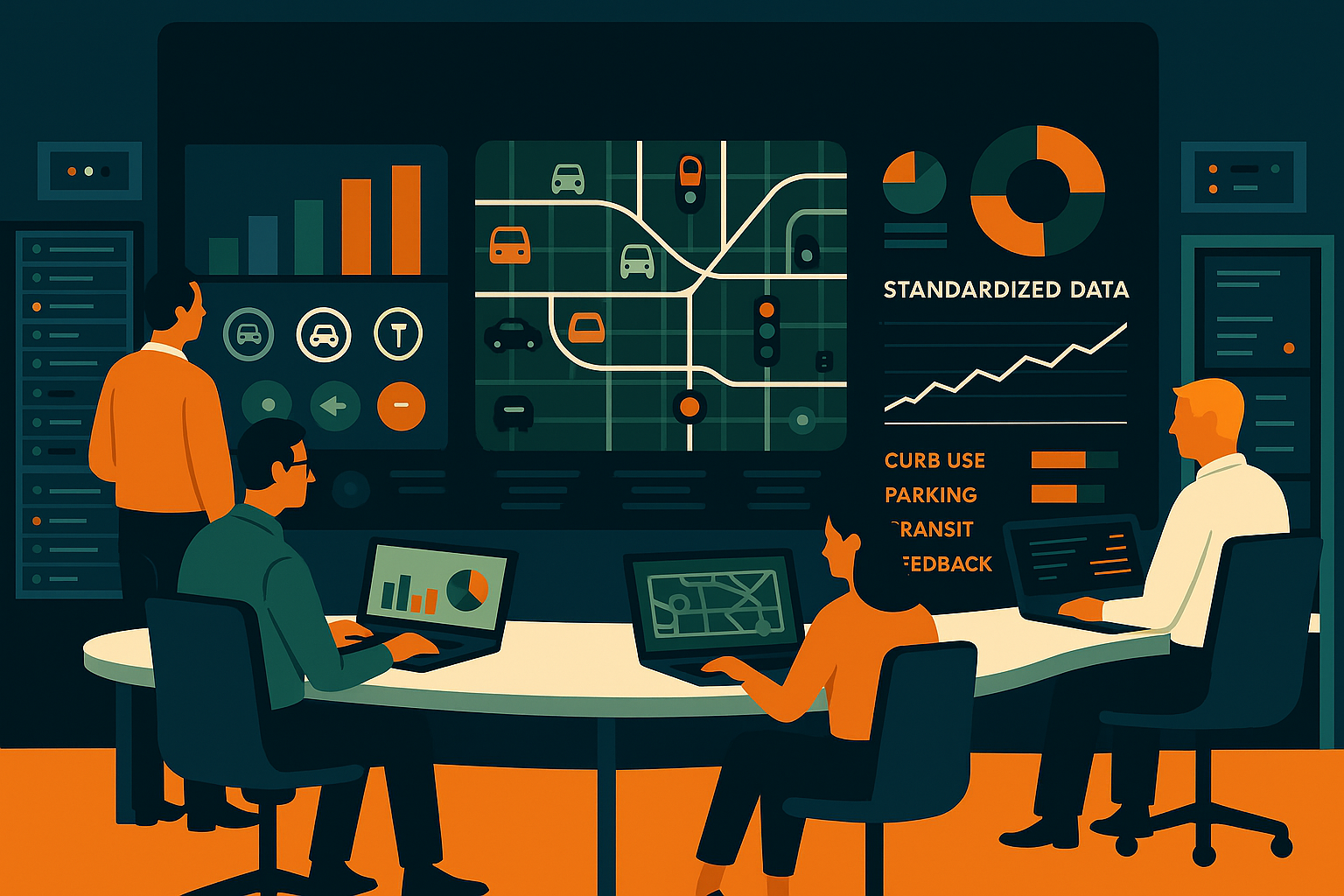
The Hidden Power of Data Standardization: How Cities Unlock Interoperability
Cities are generating more information than ever — from traffic sensors and parking meters to curb regulations, transit systems, emergency operations, and resident reporting. But when this data lives in different formats, platforms, and structures, it quickly becomes fragmented and difficult to trust.
The real cost of unstandardized data?
Lost opportunities, inefficient operations, wasted budget, unclear reporting, and decisions made on incomplete or inconsistent information.
City data standardization fixes this problem at the root.
When data follows a shared structure, every system, department, and workflow can finally speak the same language. That’s when cities unlock true interoperability — the ability to integrate new datasets quickly, build on existing systems, and see a clear, accurate picture of what’s happening across their streets.
What Is City Data Standardization — and Why Does It Matter?
City data standardization means cleaning, structuring, and formatting datasets so they can connect and function seamlessly across tools, departments, and vendors. It is the digital foundation of a modern city — a consistent data language that eliminates confusion, mismatches, and costly manual cleanup.
When standardized:
- Departments integrate faster
- Dashboards update reliably in real time
- Trends turn into actionable insights
- Collaboration becomes second nature
- Leaders can plan and execute with confidence
Simply put: standardization gives cities clarity they can trust.
Why Standardization Matters More Than Ever
The most visible benefit is interoperability — connecting transportation, public works, emergency response, sustainability programs, and permitting systems into one dependable ecosystem.
For example, parking regulations may describe what’s allowed on a block, while street closures or temporary tow-away zones add crucial context.
When these datasets share a common structure, reconciling them takes hours instead of weeks.
Standardization unlocks:
- Higher data quality & accuracy
- Better trend & impact analysis
- Faster decision-making
- Lower operational costs
- Future-readiness for IoT and AI
- Improved collaboration & transparency
Case Study: San Francisco Municipal Transportation Agency (SFMTA)
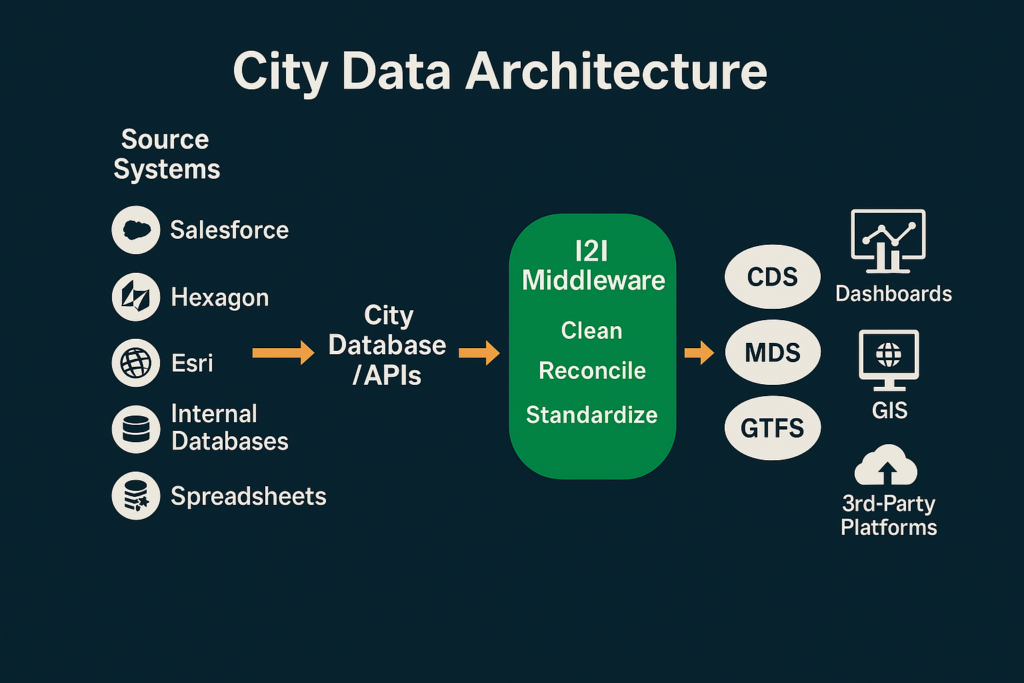
SFMTA needed a more connected and accurate view of their curbside and mobility datasets. Their source data originated across several internal systems — including Salesforce, Hexagon/ESRI GIS platforms, internal databases, city-hosted APIs, and legacy spreadsheets — each storing information differently.
Idea2Impact Tech Solutions (I2I) worked alongside their teams to build a standardized data pipeline that merged:
- Parking meter rules
- Temporary street closures
- Tow-away zones
- Construction and regulatory updates
Everything unified into a single, synchronized source of truth.
It’s important to note: open standards like CDS and MDS define the final output, but they don’t clean or reconcile the city’s internal systems. That “interoperability layer” is where the real work happens.
The impact:
- Reconciliation timelines dropped from weeks to days
- Dashboards remain accurate and trustworthy
- Teams can respond to internal and public inquiries faster
- Data integrates cleanly with platforms like INRIX Road Rules
With standardized data, SFMTA now operates with greater speed, visibility, and confidence.
Lessons Learned Through Real-World Implementations
Faster Reconciliation
Automated and standardized pipelines drastically reduce manual cleanup.
Clearer Visibility
When curb rules, zones, and temporary conditions sync together, agencies gain a real, actionable picture of their streetscape.
Smooth Platform Integration
Interoperability-first design ensures cities stay scalable and ready for modern mobility technologies.
Digital Infrastructure Matters
Just as roads connect neighborhoods, standardized data connects systems, teams, and tools. We don’t just build pipelines — we build the digital infrastructure that powers smarter decisions.
Why Cities Can’t Afford to Wait
With a standardized data foundation, cities gain:
- Interoperability
- Accuracy
- Efficiency
- AI & IoT readiness
- Public credibility
Cities that upgrade their data infrastructure now will be better equipped to serve residents, secure funding, and respond quickly to emerging needs.
Final Word: Your City Runs Better on Clean, Connected Data
Interoperability is not an afterthought — it’s infrastructure.
At Idea2Impact Tech Solutions, we help cities:
- Clean and standardize messy datasets
- Build pipelines that auto-ingest, translate, and sync
- Power real-time dashboards
- Align data with open standards
- Integrate with mobility platforms and internal systems
When your data speaks the same language, your entire city moves together — faster, smarter, and more confidently.
Let’s connect. Whether you need a fresh start or an extra set of hands, we’re here to turn your data into decisions.